Updated September 2026
If you have searched "SkinStylus vs SkinPen," or wondered whether a branded pen is really different from the microneedling a friend had years ago, you are asking a good question, and the answer is simpler than the search results suggest. The device matters, but it is not the biggest variable in your result. This guide explains what SkinStylus is, how motorized pens differ from rollers and older devices, how SkinStylus and SkinPen compare, and what shapes your outcome more than any logo on the handpiece.
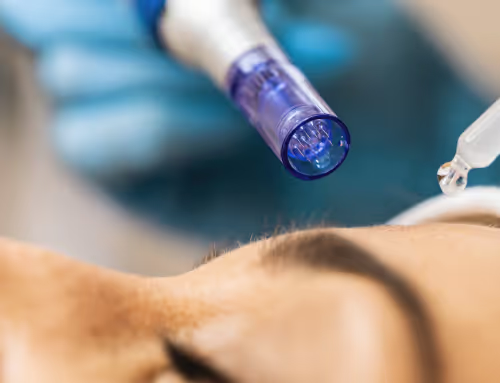
SkinStylus is a motorized microneedling pen. A slim handpiece drives a cluster of very fine needles up and down at high speed while your provider glides it across the skin. Each treatment uses a single-use needle cartridge that is opened for your session and discarded afterward. SkinStylus holds FDA clearance as a microneedling device.
The goal is the same as every form of microneedling: create controlled micro-injuries that trigger the skin's repair response. That response supports collagen renewal, which is why microneedling is used to soften the look of acne scars, fine lines, enlarged pores and uneven texture over a series of treatments. Individual results vary.
"Traditional microneedling" usually means one of two things, and the distinction matters more than the brand name.
A roller is a barrel studded with fixed-length needles that is rolled by hand across the face. Depth is the same everywhere, the rolling motion creates angled entry points rather than straight ones, and one set of needles covers the entire treatment. Home rollers add a further concern: cleaning and reuse between sessions.
Early pens introduced the vertical stamping motion most providers prefer today, but some used reusable tips or offered limited depth and speed adjustment.
SkinStylus has all four of these. They describe the modern motorized-pen category rather than one brand, which is why the more useful question is not "which pen" but "who is holding it."
This is the comparison most people actually mean when they search, so here it is plainly: SkinStylus is a motorized microneedling pen, and SkinPen is another widely used motorized pen. Neither is "the real one" with the other a lesser copy. In experienced hands, both do the same job.
Each brand engineers its own cartridge and handpiece, and manufacturers publish their own specifications. Rather than compare spec sheets you cannot verify in the treatment room, focus on the one differentiator that reliably shows up in results: provider familiarity. Providers tend to favor the pen they trained on and use most, because they know exactly how it behaves on different skin types and areas, and that familiarity is what lets them choose the right settings for your concern.
We do not claim that one is superior to the other, and it is worth being skeptical of any page that does. A skilled provider with either device will outperform an inexperienced one holding the "better" pen. Ask which device your provider uses and why. A good answer will be about your skin, your concern and their experience, not about the brand.
Coverage pattern, pressure, the number of passes, and how the provider handles thinner skin around the eyes and mouth all shape the result. This is why microneedling belongs in a medical setting with a trained provider rather than in a bathroom mirror.
Depth is chosen for the concern, not set once and forgotten. Fine lines and general texture are usually treated more superficially; pitted acne scars usually call for more depth. Going deep everywhere does not speed up results. It mostly adds downtime.
Microneedling can be paired with your own platelet-rich plasma (PRP) or platelet-rich fibrin (PRF), prepared from a small blood draw and applied to the skin during treatment. Your provider can explain whether an add-on fits your goals and what it changes in your plan.
One session can leave skin looking fresher, but structural change such as scar softening builds over a series spaced weeks apart, with improvement continuing for months afterward as collagen remodels. The number and spacing of sessions is set for your skin, not pulled from a menu.
Here is how a microneedling appointment runs at Drenched, whichever device is in the room.
Microneedling is offered at both our Cerritos studio and our Costa Mesa studio, and it is one of the core treatments on our smoother skin plan alongside peels and Hydrafacial.
Your provider gives you an aftercare plan, and it is the plan to follow over anything you read online. In general terms, expect it to cover:
Microneedling is not suitable for everyone. Treatment is typically postponed for active infection or inflamed skin in the treatment area, is generally not performed during pregnancy, and needs careful discussion if you have a history of keloid or raised scarring. Certain medications and healing conditions also matter. If any of these apply to you, ask your provider before booking; a consultation is the right place to sort it out.
Radiofrequency microneedling adds heat energy to the needles for skin tightening and deeper remodeling, at a higher price and with more downtime. If laxity or deeper scarring is your main concern, read our comparison of RF microneedling vs traditional microneedling before you decide.
If you are ready for microneedling, book directly in Cerritos or Costa Mesa. If you would rather talk it through first, start with a complimentary skin consultation in Cerritos or Costa Mesa, where your provider can look at your skin, explain the device they use and why, and confirm current pricing. Questions first? Call (855) 635-0011 or text (562) 600-2820.
%201.avif)
Beauty Vault membership
100% of your membership dollars banked for your treatments. A complimentary welcome Hydrafacial or Microneedling when you join. A treatment gift certificate for someone you love.*
Compare plans & gifts ↗*Gifts vary by membership tier. Friend gift available after your third paid month for one friend or family member new to our practice. Active membership required. Eligible treatments and membership terms apply. Compare plans for all gift choices.


.svg)